

Why High-Achieving Women Often Struggle With Rest
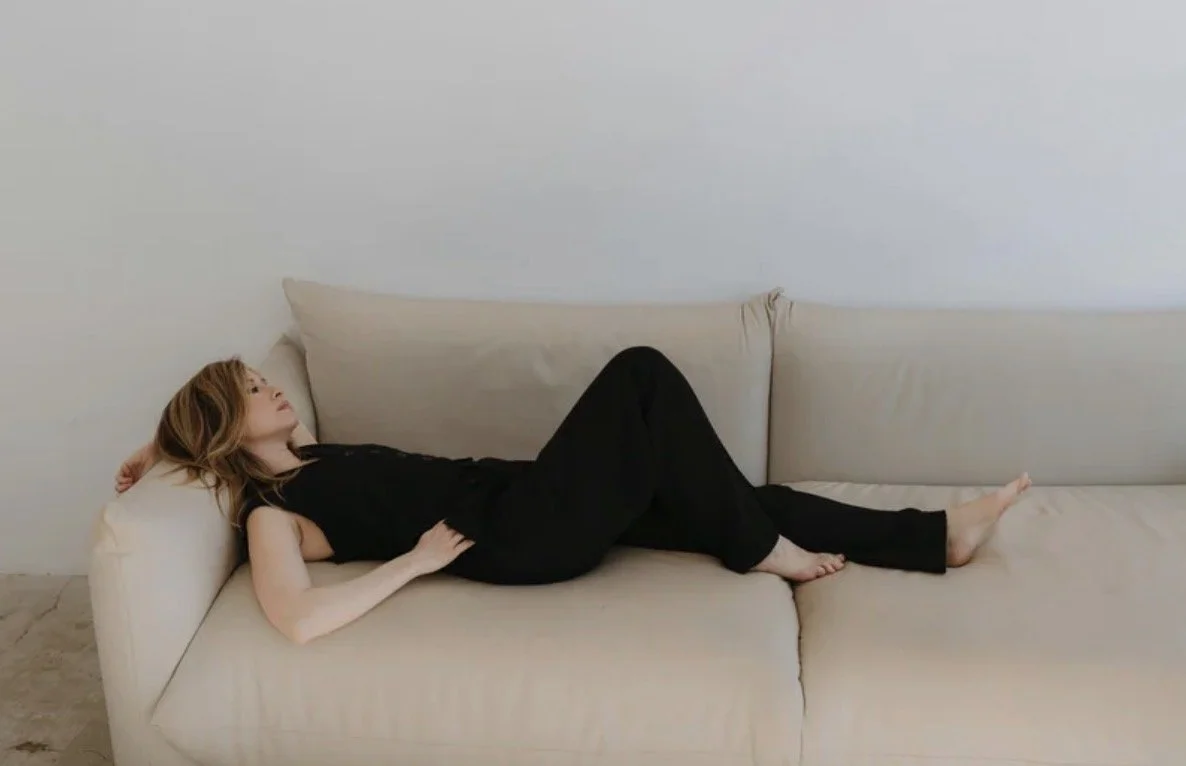
Rest.
You dream about it. You crave it. You tell yourself that once things slow down, you are finally going to rest.
But when the opportunity actually comes, something inside of you struggles to let it happen.
You could spend weeks running on empty. Working 80-hour weeks. Taking care of your children. Supporting everyone around you. Carrying responsibilities nonstop without breaks.
Yet the moment you finally stop and attempt to truly rest, your mind starts turning against you.
You should get up.
You should clean the house.
You’re wasting time.
This is lazy.
You’re falling behind.
You should be doing something productive.
And suddenly, the thing your body desperately needed starts to feel deeply uncomfortable.
You may even spend the entire day “resting” but never actually feel rested.
Instead, you doom scroll.
You feel restless.
Anxious energy builds in your body.
You cannot fully relax.
And by the end of the day, you tell yourself you “wasted” it.
If this sounds familiar, you are far from alone.
Why Rest Feels So Hard for High-Achieving Women
Many high-achieving women have unintentionally built their identity around productivity, responsibility, and performance.
Somewhere along the way, your nervous system may have learned:
Being productive equals being valuable
Slowing down is unsafe
Rest is lazy
Your worth comes from what you accomplish
If you stop, everything will fall apart
You always need to stay ahead or prepared
Over time, your body adapts to living in a constant state of activation.
You become so used to functioning in stress mode that stillness itself starts to feel uncomfortable.
This is why rest can feel strangely threatening even when you logically know you need it.
Your mind may say:
“I deserve rest.”
But your nervous system says:
“We don’t know how to be safe here.”
The Problem Is Not That You’re Weak or “Bad at Rest”
This is important to understand:
The struggle with rest is often not about laziness, lack of discipline, or even poor time management.
For many women, it is deeply connected to the nervous system and unresolved emotional patterns.
Sometimes achievement became the way you earned love, validation, safety, or approval.
Sometimes staying busy protected you from uncomfortable emotions.
Sometimes productivity became the thing that helped you feel in control.
And when your nervous system has lived in survival mode for years, slowing down can actually trigger anxiety rather than peace.
That is why many women say:
“I don’t even know how to rest.”
Not because they are incapable of resting, but because their body has learned to associate rest with discomfort, guilt, vulnerability, or loss of control.
Rest Is Not a Bad Word
Rest is not weakness.
Rest is not laziness.
Rest is not irresponsibility.
Rest is life-giving.
Rest is part of how your body heals, regulates, creates, connects, and sustains long-term capacity.
Without rest, many high-achieving women eventually find themselves:
Emotionally exhausted
Irritable
Disconnected from themselves
More anxious
Less present
Burned out
Operating purely in survival mode
Ironically, the women who struggle most with rest are often the women who need it most.
Why “Just Relax” Usually Doesn’t Work
If you have ever tried to rest and found yourself becoming more anxious, this is why simple advice like:
“Just slow down.”
“Take a self-care day.”
“Relax more.”
often feels ineffective.
Because this is not just cognitive.
It is physiological.
Your nervous system may still be operating as though constant movement, achievement, and hyper-responsibility are necessary for safety.
That means true healing often requires more than insight alone.
How EMDR Can Help Break the Cycle
Eye Movement Desensitization and Reprocessing can help uncover and process the deeper experiences and beliefs that keep your nervous system stuck in overdrive.
EMDR helps target the underlying patterns that often fuel chronic overfunctioning, including:
Fear of not being enough
Pressure to constantly perform
Perfectionism
Hyper-responsibility
Fear of disappointing others
Shame around slowing down
Beliefs that rest must be earned
Anxiety connected to stillness or lack of productivity
Rather than simply teaching you to “manage stress,” EMDR helps your brain and nervous system process unresolved experiences that may still be driving these patterns underneath the surface.
Over time, many women begin to notice:
Less guilt around rest
Increased ability to slow down without panic
Greater emotional regulation
More internal peace
Improved nervous system capacity
Less pressure to constantly prove themselves
The ability to rest and actually feel restored
You Do Not Have To Earn Rest
One of the hardest things for many high-achieving women to believe is this:
You do not have to completely burn yourself out before you are allowed to rest.
Rest is not something you earn after collapsing.
It is something your mind, body, and nervous system were designed to need.
And learning how to rest without guilt is not laziness.
For many women, it is actually part of the healing process.

About the Author
Sarah Harris is a Licensed Clinical Social Worker and EMDR therapist at The Orchid Women’s Wellness Center, specializing in virtual therapy and virtual EMDR intensives for high-achieving women across Florida. She helps women heal anxiety, trauma, perfectionism, and recurring emotional patterns through EMDR, nervous system-based therapy, and Christian counseling.