

Why High-Achieving Women Are the Last to Ask for Help

You have held it together your entire life.
You are the one who figures things out. The one who pushes through. The one people describe as strong, capable, dependable, driven.
When things get hard, you work harder. When something breaks, you fix it. When everyone else needs support, you show up.
You have built an entire identity around being the person who handles things.
And for a long time, that worked.
But something has shifted.
The anxiety you used to be able to outrun has started following you into rooms where you are supposed to feel safe.
The exhaustion is no longer something a good night of sleep fixes.
The patterns you have tried to logic your way out of keep showing up anyway.
And somewhere underneath all of it, a quiet awareness is growing that you cannot push through this the way you have pushed through everything else.
But asking for help?
That is a different thing entirely.
Why Asking Feels So Foreign
For most high-achieving women, self-sufficiency is not just a habit. It is a deeply ingrained identity.
You learned early that being capable was safe. That needing things from people was risky. That the most reliable way to be okay was to handle things yourself.
Maybe you were the responsible one growing up. The one who held it together while others fell apart.
Maybe asking for help was met with disappointment, dismissal, or the quiet message that your needs were inconvenient.
Maybe you simply watched the adults around you carry things alone and absorbed the belief that strength means not needing anyone.
Whatever the origin, the result is the same.
Asking for help does not just feel uncomfortable. It feels like a betrayal of who you are.
The Story You Tell Yourself
What I notice clinically is that high-achieving women rarely come to therapy the moment they realize something is wrong.
There is usually a long period before that where a very convincing internal story keeps them from reaching out.
It sounds something like this:
I should be able to handle this.
Other people have real problems. Mine are not that serious.
I know too much about this to still be struggling with it.
I just need to try harder, rest more, get more disciplined, figure out the missing piece.
Asking for help means something is actually wrong with me.
That last one is the one that tends to keep women waiting the longest.
Because for a woman whose identity is built around competence, admitting that she needs support can feel like the one thing that confirms her deepest fear.
That she is not, actually, as together as everyone thinks she is.
What That Delay Actually Costs
Here is what I have observed in working with high-achieving women.
The longer they wait, the more they carry.
What might have been addressed earlier becomes more entrenched. The nervous system stays dysregulated longer. The patterns get practiced more deeply. The exhaustion compounds.
And the version of themselves they are showing up as in their relationships, their work, their faith and in their own private moments keeps falling shorter of who they actually want to be.
The delay does not protect them.
It just extends the suffering quietly.
What Finally Makes the Difference
Most of the high-achieving women I work with did not reach out the first time they knew something was wrong.
They reached out when the gap between how they were living and how they wanted to live became too large to ignore.
When the anxiety stopped being manageable and started being constant.
When the relationship pattern repeated one more time and they could not pretend it was circumstance.
When they found themselves sitting with something at 11pm that they could not outrun, outperform, or reason their way through.
When the cost of keeping it together finally outweighed the discomfort of asking for help.
That moment is not weakness.
It is actually the most self-aware, courageous thing a high-achieving woman can do.
Recognizing that what she has been doing is not working and choosing something different anyway.
Asking for Help Is Not the Opposite of Strength
I want to say this clearly because I think it matters.
Reaching out for support does not mean you are falling apart.
It does not mean you are weak, broken, or less capable than you have always been.
What it means is that you are willing to stop applying the same strategy to a problem that has not responded to it.
High-achieving women are exceptionally good at identifying what is not working in every area of their lives.
Except, often, this one.
Because this one feels too personal. Too close to the identity. Too much like an admission.
But the same intelligence, drive, and self-awareness that has made you successful in every other area of your life is exactly what will make you capable of doing this work.
You do not have to have it all figured out before you reach out.
You just have to be willing to take one honest step.
If You Have Been on the Fence
If you have been carrying something for a while now and wondering whether reaching out is worth it, whether your struggle is serious enough, whether you are ready, I want you to know something.
The women I work with are not women who have fallen apart.
They are women exactly like you.
Capable. Intelligent. Self-aware. Doing everything right on the outside.
And privately exhausted in a way they have never quite been able to name out loud.
You do not have to wait until things get worse to deserve support.
You are allowed to reach out now.
If you are ready to take that step, I would love to connect.
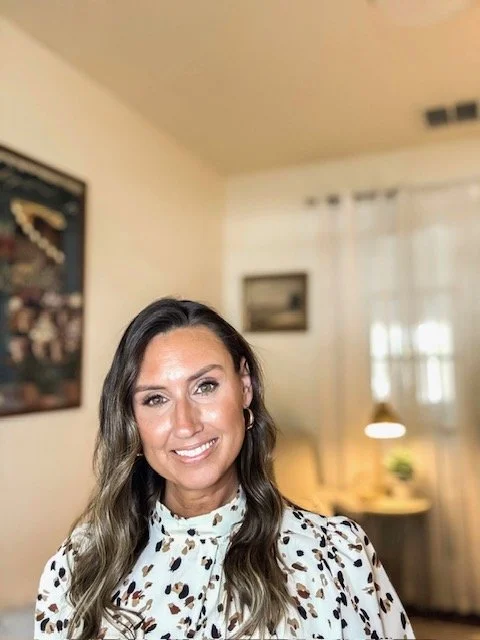
About the Author
Sarah Harris is a Licensed Clinical Social Worker and EMDR therapist at The Orchid Women's Wellness Center, specializing in virtual therapy and virtual EMDR intensives for high-achieving Christian women across Florida. She helps women heal anxiety, trauma, perfectionism, and recurring emotional patterns through EMDR, nervous system-based therapy, and Christian counseling.