
Why Inspiration Alone Cannot Change Your Life
By Sarah Harris, LCSW · · 5 min read

You keep starting the bold thing and quietly retreating to safe. Here’s why inspiration alone can’t carry you through fear of failure.
The Moment Inspiration Hits
You heard something, or saw something, or simply woke up one day with a thought you could not shake. I could actually do this.
Maybe it was starting the business. Applying for the role you do not feel fully qualified for. Setting the boundary that might cost you a relationship. Leaving the thing everyone expects you to keep doing. Whatever it was, it was not safe. It had real risk attached to it. It meant you might fail, publicly, in front of people who are used to seeing you succeed.
And for a moment, that did not matter. The idea felt bigger than the fear.
That feeling is real. It matters. It is what gets a new venture moving. It is what starts the hard conversation you had been putting off. It is what fills the first pages of a plan you actually intend to follow through on.
Inspiration gets you started. It gets you dreaming. It gets you into action.
Then the risk becomes real, and it fizzles out.
Here is what nobody warns you about.
Inspiration has an expiration date.
Why Inspiration Alone Cannot Hold You
Here is what makes this confusing. You are not someone who struggles to follow through. You follow through constantly. You hit deadlines, run households, manage teams, keep every commitment you have made to everyone else.
But there is a specific category of things that keeps fizzling out, and it is almost always the thing that required risk.
Picture the version of this that plays out over and over. You get hit with an idea. It is bold. It is a little scary. It might not work. But for a few days, or a few weeks, you move. You research it, you tell someone about it, you take the first real step.
Then the safe option starts whispering. What if this fails and everyone sees it. What if you gave up a sure thing for a maybe. What if this was never actually meant for you, and you were simply excited for a minute. The fear of failure puts on the costume of wisdom and calls itself being realistic.
So you quietly go back to the safe bet. The one that will not embarrass you. The one nobody will ever ask you to explain.
And then the frustration sets in, not because you failed, but because you never even got far enough to find out what would have happened. You are left circling the same question. Why can I lead a team, hit every deadline, hold an entire household together, and still not do this one thing for myself.
You can probably picture other versions of it too. The plan you researched and then let quietly die. The application you almost finished. The conversation you rehearsed in the car and never had. You were not lying to yourself when you got excited. You meant it. The feeling was real. It just was not built to outlast the fear once the fear showed back up.
It is not a discipline problem. You clearly have discipline. It shows up everywhere except in the places that actually require you to risk something.
That is not a character flaw. It is a pattern. And in a world engineered for quick dopamine hits and instant results, it is an increasingly common one.
We have been conditioned by technology and culture to expect fast, to feel rewarded quickly, and to disengage the moment something stops feeling good. That rewiring does not stay in your phone. It shapes how you approach risk, ambition, calling, and every hard and worthy thing in your life.
What Is Actually Happening When You Stall Out
This is not really about the plan, the application, or the conversation you never had. Those are just the places the pattern shows up.
Underneath it is usually fear of failure, and underneath that is often something your nervous system decided a long time ago. Maybe failure once meant real consequences. Disapproval. Losing something you could not afford to lose. Being seen as less than capable in a family or environment where capable was the whole identity. So your body learned a rule. Stay where it is safe. Do not risk what you have already built.
That rule made sense once. It may have even protected you. But it does not know the difference between the situation that formed it and the opportunity sitting in front of you right now. It just recognizes risk, and it pulls you back toward safety every time, no matter how much you want to move forward.
You can pray about it. You can journal about it. You can feel God’s peace confirming that this is the right next step, and still find yourself retreating a few weeks later when the fear gets loud again. That does not mean the inspiration was not from Him. It means inspiration was never meant to override a nervous system pattern by itself.
This is not a willpower problem. It is a pattern problem. And patterns live in the nervous system, not just the mind.
Why EMDR Gets to the Root
EMDR, Eye Movement Desensitization and Reprocessing, is not an inspiration booster. It does not give you a bigger jolt of courage before the next risk. It does something far more foundational.
It works with the way God already designed the brain to heal.
Your brain has a built in system for processing difficult experiences. When life events, wounds, or prolonged stress overwhelm that system, the experiences do not get fully processed. They get stored in ways that keep showing up, in your reactions, your relationships, your patterns, your nervous system responses, long after the original event has passed.
EMDR helps the brain do what it was designed to do. Process, integrate, and move forward.
For high-achieving Christian women, this often means getting underneath the fear of failure itself. Where it came from. What it was protecting you from once. Why your body still treats a good risk the same way it treats real danger. EMDR does not just help you push through fear with more willpower. It addresses the experience that taught your nervous system failure was not survivable in the first place.
Showing Up When You Do Not Feel Like It
Paul tells us not to grow weary in doing good, because in due season we will reap a harvest if we do not give up.
That verse is not about feeling energized. It is about faithfulness when the feeling is gone.
The women who actually take the risk, start the thing, and stay with it long enough to find out what could happen are not the ones who stayed excited the whole time. They are the ones who kept moving anyway. Who learned to move from commitment rather than feeling. Who leaned into the Holy Spirit as their sustaining power rather than waiting for the next spark of courage to carry them.
That is a different way of living. And it is learnable.
This Is the Work
If you are a high-achieving woman who knows there is something you keep starting and abandoning, who is tired of watching a good idea die every time the fear gets loud, this is an invitation.
Not to feel more inspired. To become someone who can stay.
The Lord does some of His most powerful work in the quiet, unglamorous, faithful middle of the process. Not just at the beginning when everything feels full of possibility, but in the weeks that feel uncertain, the moments you choose to move forward even when the fear is loud and the safe option is right there.
That is where real change actually happens.
If you are ready to do the deep work and would like to explore whether EMDR therapy is a good fit for you, I would love to connect.
Tags
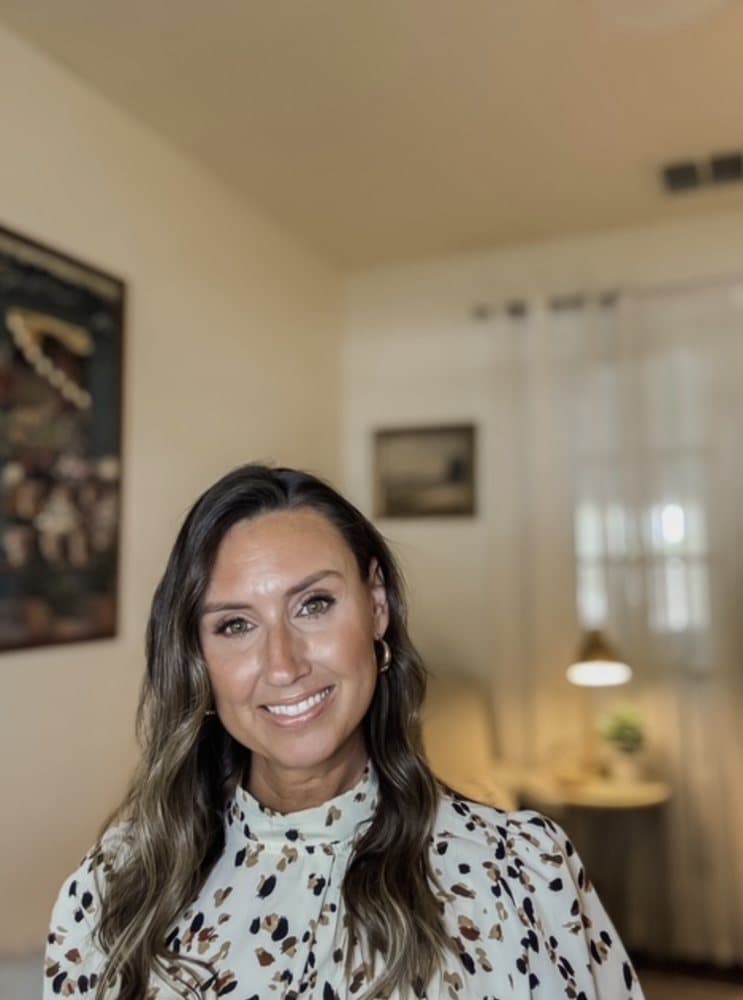
Sarah Harris, LCSW
Sarah Harris is a Licensed Clinical Social Worker and EMDR therapist at The Orchid Women’s Wellness Center, specializing in virtual therapy and virtual EMDR intensives for high-achieving women across Florida. She helps women heal anxiety, trauma, perfectionism, and recurring emotional patterns through EMDR, nervous system-based therapy, and Christian counseling.